
Petrol stations
Between the pump and the till, the process decides.
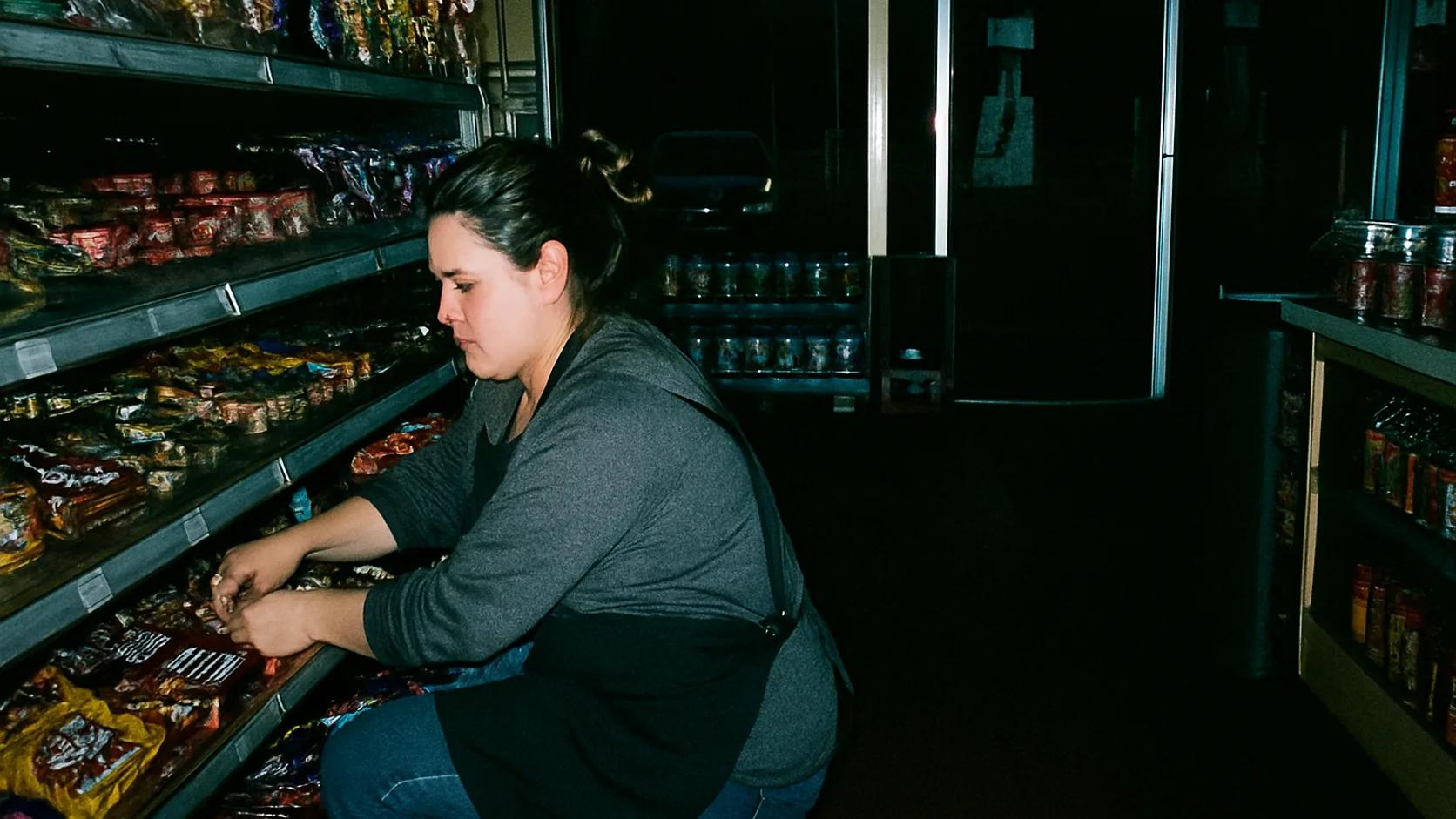
Between the shift handover at six and the next one at two in the afternoon lies the real work: counting the till and stock at the start of the shift, checking the pumps work, restocking the bake-off shelf, topping up snacks in the heated display, adjusting along the way when a pump fails or the coffee machine plays up, and at the end of the shift cashing up and handing over to the night shift. Every shift hands this state over to the next, around the clock, because nobody locks up here. Set down as a clear process, the station runs just as reliably at three in the morning as at three in the afternoon, no matter who is alone behind the till today.
The same standards, from the independent station to the branded chain.
Every device has its own tasks
Pumps, car wash, chiller shelf, coffee machine and snack station are not a single "clean the shop" item on a list. Every device has its own tasks, split by start and end of shift: check the pumps for leaks and function, check the chemical levels in the car wash, document the chiller shelf temperature, clean and descale the coffee machine.
Businesses name their devices by type rather than by a generic name. Where several pumps stand side by side, "Pump 3 diesel" makes it immediately clear which one is meant, and a fault report goes straight to the right device rather than into a general list.
Every task can be linked to devices from the catalogue. From the moment it is linked, the system automatically provides the matching operating manual: it is attached to the device and its text is searchable. The AI assistant answers questions from it, without anyone having to hunt for the manual.
Multilingual is the norm here
Tasks are created and evaluated in the business language, German or English. Every staff member sees them in their own language: German, English, Spanish, Serbian, Russian, Turkish, French or Vietnamese. Sales staff, shift managers and cleaners in this industry rarely come from a single country — that is not a special case but everyday life.
The language follows the person, not the location. Anyone who prefers to read in their own language gets the tasks that way, while setup and reporting stay in the business language for station management.
The forecourt is part of it
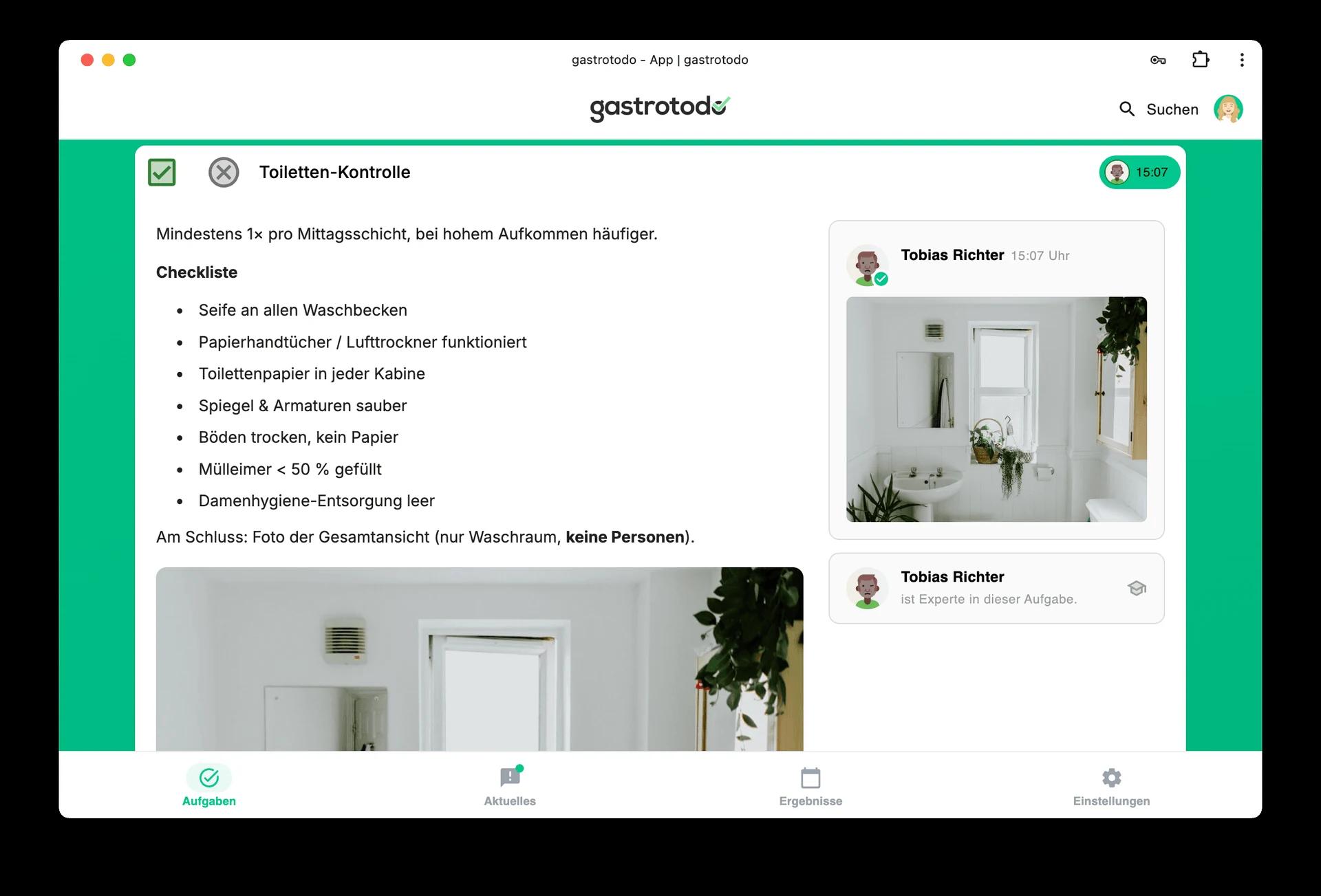
The sales floor is only one part of the business. Pumps with paper and diesel gloves, filling buckets and cans, sweeping the yard and driveway, cleaning the car wash floor, emptying the outdoor bins — that is the area the customer sees first.
And the only "dining room" that cars drive across. Anyone not running it as an area of its own has reliably forgotten it between the till and the oven.
Product quality is logged like hygiene
Alongside the cleaning tasks run checkpoints on the product and the site: keep to snack holding times, spot-check the quality of coffee and baked goods, check the best-before dates of chilled goods, take tank readings and check the pumps for leaks, count the cash in the till at every shift change. Plus the task of regularly testing the emergency stop and the camera system, because one person often works the night shift alone here.
So the record here is not only about the authorities. A petrol station documents whether pump, coffee and till work reliably at two in the morning too — because that is exactly what makes the difference when a customer is on the road alone.
What petrol station operators want to know first
We are tied to a brand. Does head office set the standards?
Yes, much like a franchise: the brand owner maintains standard checklists centrally, and the station operator adds tasks of their own where needed, without changing the core standard.
How often a day can a task like the chiller shelf check recur?
As often as you like. You set up hourly temperature checks as individual tasks per time slot, which later shows exactly which round was missed.
How do we document snack quality at the bake-off counter?
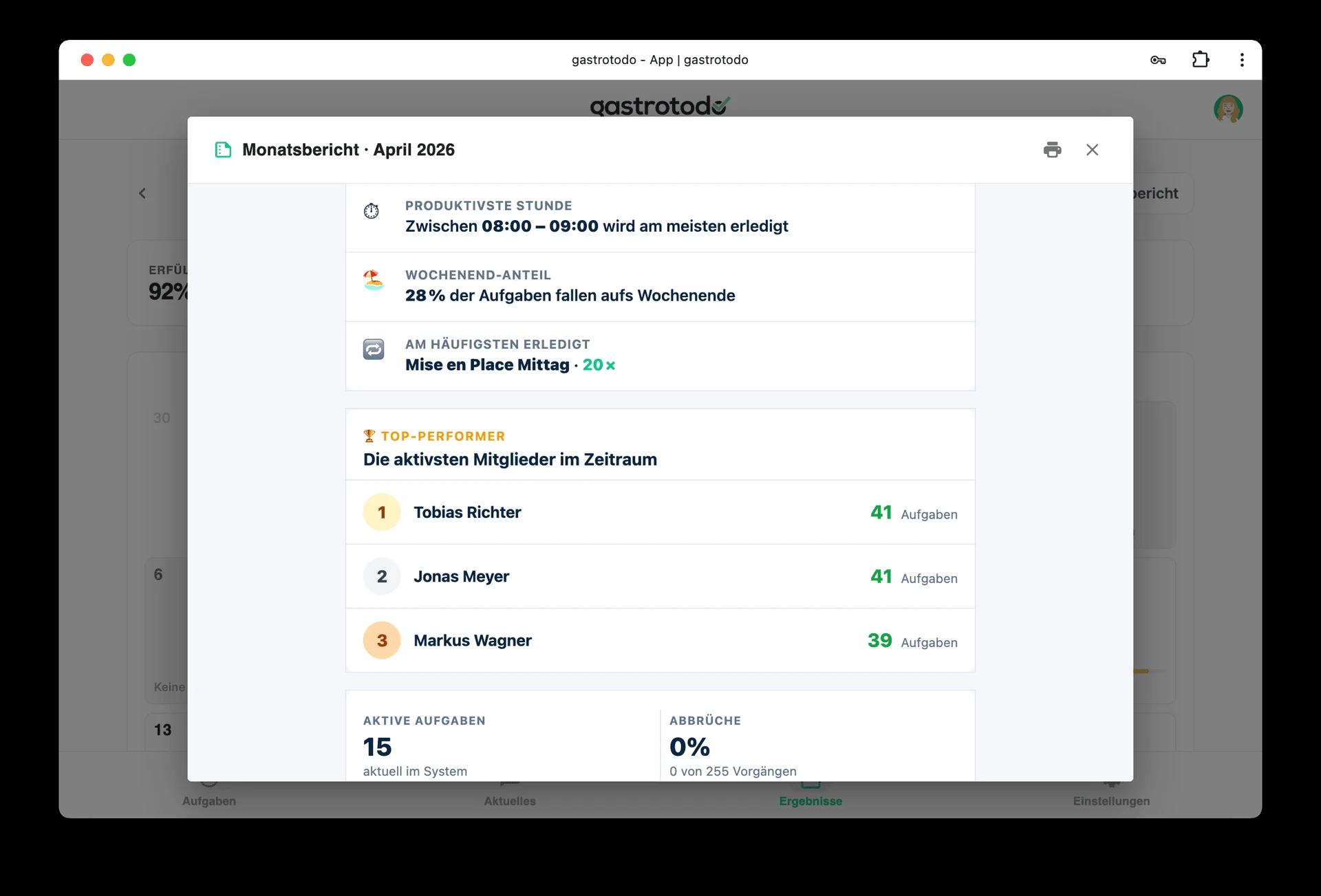
As a checkpoint with timestamp and signature. It lands in the HACCP documentation with person and time.
At night there is often only one person on shift. What does the system do then?
That is exactly when a clear task list helps: safety checks such as the emergency stop, camera and till still get done, even when nobody drops by to check — that protects the person and at the same time documents that everything was checked.
Ready to structure your business?
Start with gastrotodo — try free for 7 days, then carry on with the plan that fits your business.