
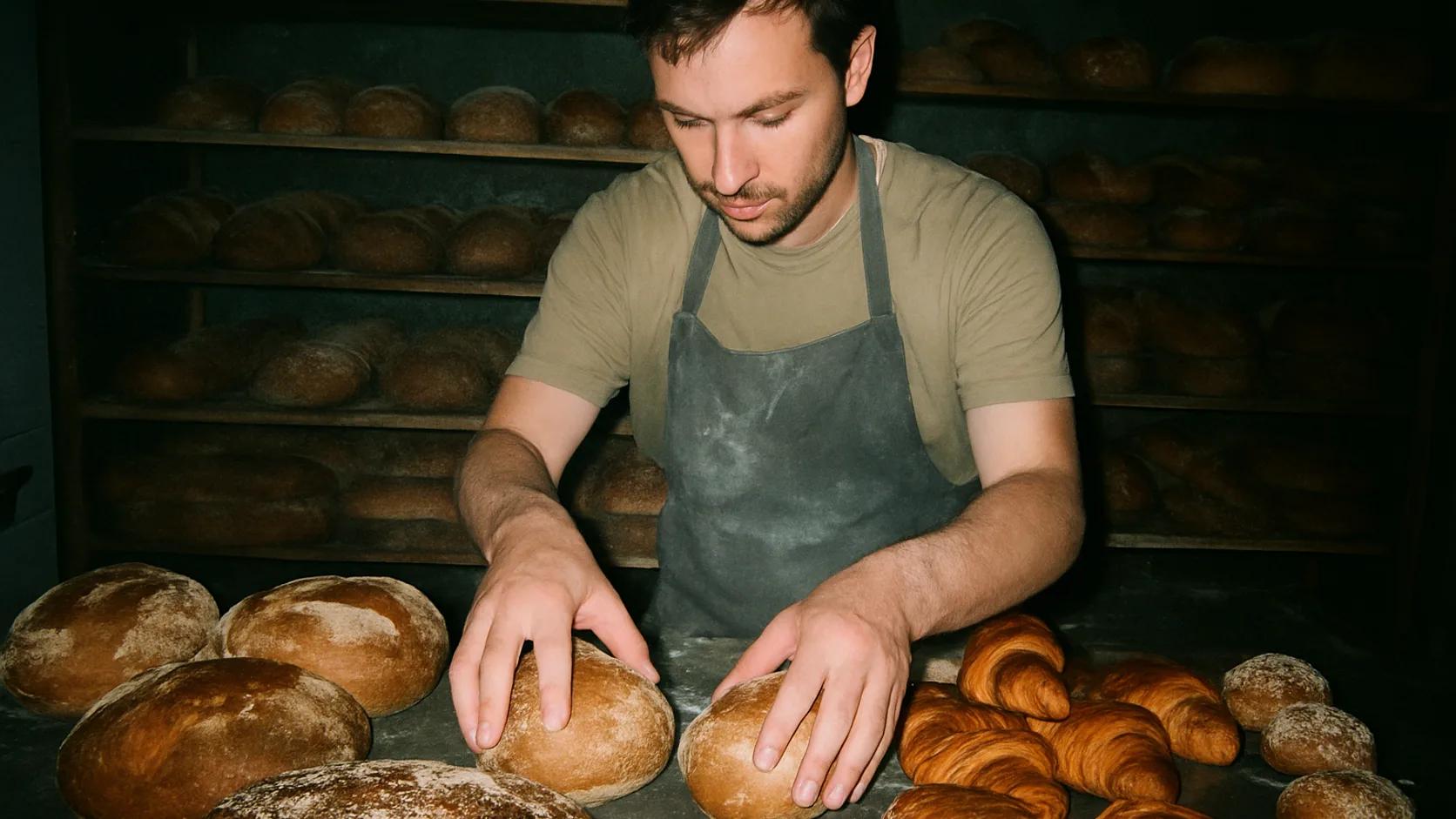
Bakeries & baked goods
Between the bakehouse and the shop counter, the process decides.
Between starting the dough at four in the morning and the first customer at six lies the real work: mixing doughs to recipe, keeping to proving times, setting the oven for the right batch, stocking the display with fresh bakes, adjusting along the way when a dough needs longer or a batch has to be baked again, and at the end of the day emptying the display and recording returns. Every shift hands this state over to the next. Set down as a clear process, the roll tastes the same at six as at ten, no matter who is in the bakehouse today.
The same standards, from the family bakery to the bakery chain.
Every device has its own tasks
Oven, dough mixer, proofing cabinet, chilled display and slicer are not a single "clean the bakehouse" item on a list. Every device has its own tasks, split by production and sales: clean the oven after every bake, wash out the dough mixer after every dough, check the proofing cabinet for temperature and humidity, check the chilled display temperature in the morning.
Businesses name their devices by type rather than by a generic name. Where a second oven for rolls stands next to the bread oven, "Oven 2 rolls" makes it immediately clear which one is meant, and the cleaning instructions match the exact device rather than a category.
Every task can be linked to devices from the catalogue. From the moment it is linked, the system automatically provides the matching operating manual: it is attached to the device and its text is searchable. The AI assistant answers questions from it, without anyone having to hunt for the manual.
Multilingual is the norm here
Tasks are created and evaluated in the business language, German or English. Every staff member sees them in their own language: German, English, Spanish, Serbian, Russian, Turkish, French or Vietnamese. Bakers, pastry chefs, sales staff and the drivers supplying the branches in this industry rarely come from a single country — that is not a special case but everyday life.
The language follows the person, not the location. Anyone who prefers to read in their own language gets the tasks that way, while setup and reporting stay in the business language for management.
The bakehouse needs its own cleaning schedule
Flour, fat and dough residue are a different problem from coffee grounds and crockery. So the bakehouse runs on its own cycle: combi oven, machines and utensils, work surfaces, shelves, floor — all before trading, not after.
Where another part of the business comes on top — a terrace, an outdoor counter — that is the third cycle, with its own appliances and its own close-down. Separate areas keep all of that from disappearing into one list.
Product quality is logged like hygiene
Alongside the cleaning tasks run checkpoints on the product: check the allergen labelling per recipe, check raw ingredients such as cream and eggs for best-before date and cold chain, keep to proving times and baking temperatures, record returns and unsold goods in the evening. Plus the task of checking the display for freshness several times a day, so nothing sits there longer than planned.
So the record here is not only about the authorities. A bakery documents whether the roll at six in the morning tastes like the one the day before — because that is exactly why the customer comes back.
What bakery owners want to know first
We bake centrally and supply several branches. Does that fit in one system?
Yes. The central bakehouse and the branches can run as separate areas, and delivery and acceptance at the branch are recorded as a task of their own.
How often a day can a task like the display check recur?
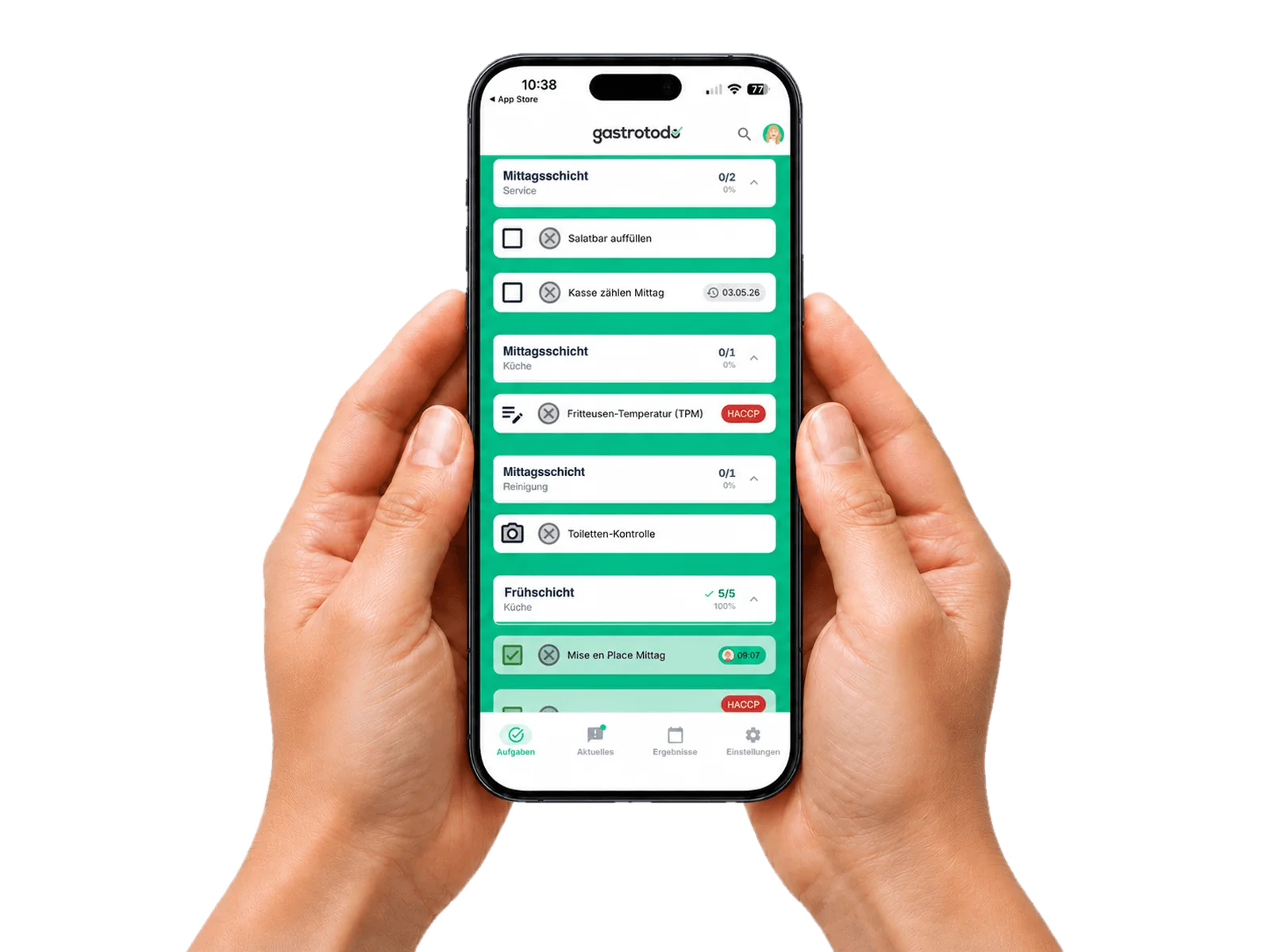
As often as you like. You set up hourly freshness checks as individual tasks per time slot, which later shows exactly which round was missed.
How do we document allergens?
As a document in the internal knowledge base, which you can ask the AI assistant about at any time.
Our first shift starts at three in the morning. Does the handover still work?
That is exactly when a written handover pays off: night production and daytime sales often never meet in person, and the task list still makes sure nothing gets lost between shifts.
Ready to structure your business?
Start with gastrotodo — try free for 7 days, then carry on with the plan that fits your business.