
Kindergartens & canteens
When the food is for children, nothing can be left to chance.
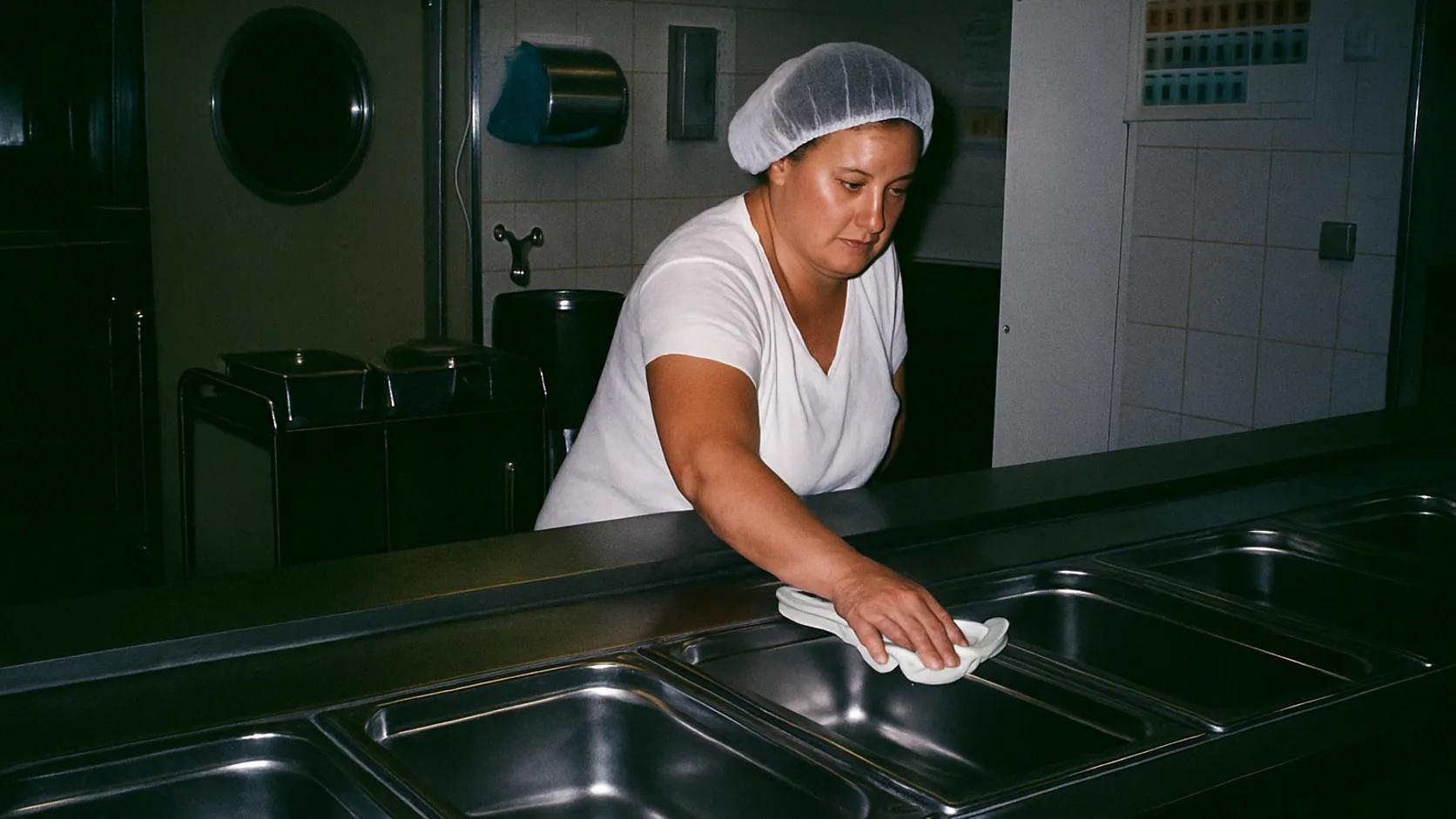
Between the week's menu and the plate in a child's hands lies the real work: having food delivered or preparing it, bringing it to the right temperature, portioning, matching allergies and intolerances per child or class, adjusting along the way when a child needs a replacement portion at short notice or a delivery is running late, and cleaning the kitchen and crockery after service. Every shift hands this state over to the next. Set down as a clear process, every child gets the food that is right for them, no matter who is at the serving counter today.
The same standards, from the single-group kindergarten to the canteen serving a thousand meals a day.
Every device has its own tasks
Regeneration oven, dishwasher, cold room, heated food trolley and portion scale are not a single "clean the kitchen" item on a list. Every device has its own tasks, split by delivery and meal service: check the regeneration oven for core temperature, document the cold room temperature, heat up the food trolley before service, check the dishwasher's rinse aid after every cycle.
Businesses name their devices by type rather than by a generic name. Where several heated trolleys stand ready for different groups or classes, "Food trolley Sun group" makes it immediately clear which one is meant, and the match to the right special diet stays unambiguous.
Every task can be linked to devices from the catalogue. From the moment it is linked, the system automatically provides the matching operating manual: it is attached to the device and its text is searchable. The AI assistant answers questions from it, without anyone having to hunt for the manual.
Multilingual is the norm here
Tasks are created and evaluated in the business language, German or English. Every staff member sees them in their own language: German, English, Spanish, Serbian, Russian, Turkish, French or Vietnamese. Kitchen staff, educators and supervisors in this industry rarely come from a single country — that is not a special case but everyday life.
The language follows the person, not the location. Anyone who prefers to read in their own language gets the tasks that way, while setup and reporting stay in the business language for management.
Allergies are logged like hygiene
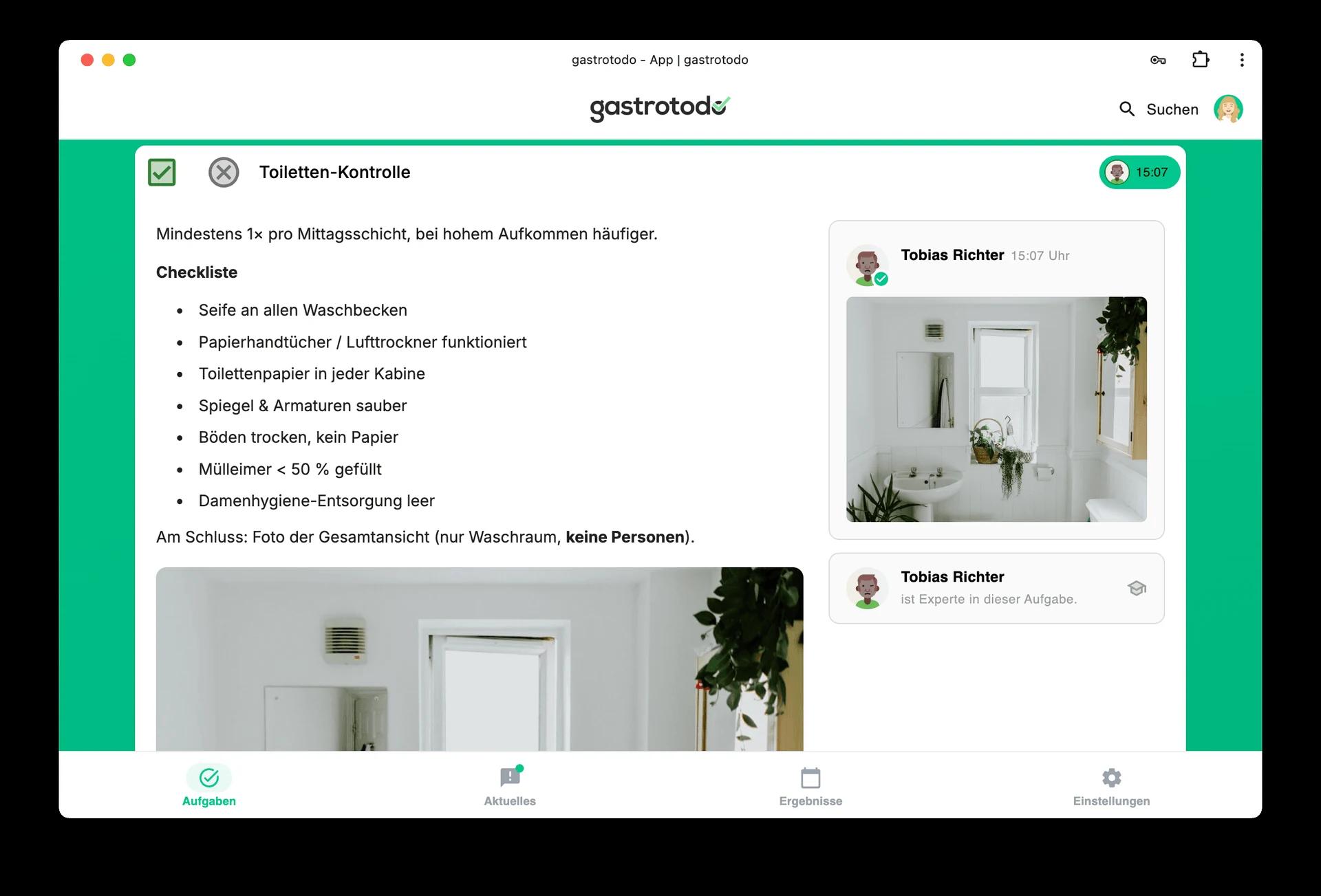
Alongside the cleaning tasks run checkpoints on the food: check the allergen labelling per dish, match special diets per child or person, measure the core temperature on delivery, check the serving temperature at the food trolley, check ingredients for best-before dates. Plus the legally required task of taking and labelling a retained sample of every dish.
So the record here is not only about the authorities. A kindergarten or canteen documents that the child with a nut allergy really did get the right portion — because here a mistake would not be without consequences.
What kindergartens and canteens want to know first
Our food is delivered by an outside caterer. Does it still work?
Yes. Delivery and the core temperature check are tasks of their own, whether the food is cooked on site or delivered.
How often a day can a task like the temperature check recur?
As often as you like. You set it up as a task of its own for every delivery and before every meal service.
How do we document allergies and special diets per child?
As a document per child or group in the internal knowledge base, which you can ask the AI assistant about at any time.
Do we have to take retained samples, and how do we document that?
Yes, that is mandatory in communal catering. Set up as a recurring task with a photo and timestamp per dish, it lands in the HACCP documentation.
How do we document the serving temperature?
As a task with a reading taken directly at the food trolley or the serving counter, repeatable as often as you like during service. It lands in the HACCP documentation with timestamp and person.
Ready to structure your business?
Start with gastrotodo — try free for 7 days, then carry on with the plan that fits your business.